
Notes from Virtual Video Group masterclass
Your Screenplay Challenge
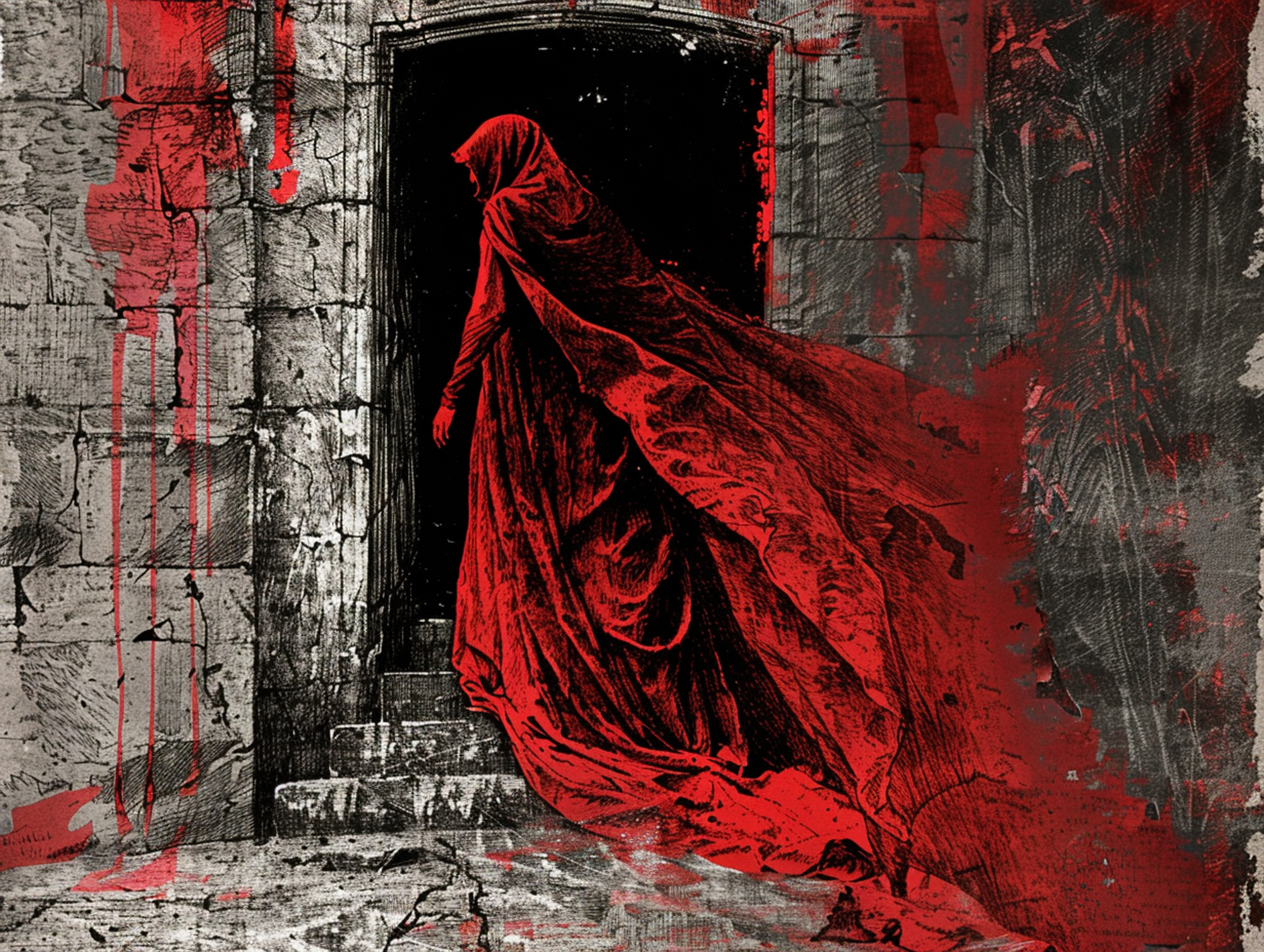
Download notes for your Masque of the Red Death screenplay challenge here:
More useful downloads at the end of this article. Please subscribe to our page.
Screenplay format
Font: 12-point Courier
Margins:
Left – 1.5 inch.
Right – 1 inch.
Top & Bottom – 1 inch.
Each page should have about 55 lines (including any blank lines).
Action: Upper & lower case, set left.
Dialogue block – starts 2.5 inches from the left.
Character names (above dialogue) UPPERCASE starting 3.7 inches from the left.
Page numbers: Top right corner with a 0.5 inch margin from the top of the page. Title page not numbered Each number is followed by a period.
CHARACTERS, SFX, PROPS in caps at first mention in action.
SHOT: Shot description all CAPS, set left on its own line. Limit these unless you’re the director.
Storytelling
Types of Writers
Plotters: Plan their entire story in advance.
Pantsers: Write spontaneously, without extensive planning.
Character Arcs
A strong story follows a simple structure:
The protagonist’s normal life is disrupted by conflict.
They must face a challenge that forces change.
By the end, they emerge transformed.
Key Rule: No scene should leave the protagonist unchanged.
Story Structure
Writers should know traditional structures but not be bound by them.
The Three-Act Structure:
Act 1 (Setup): Introduce the protagonist, setting, and inciting incident.
Act 2 (Confrontation): The protagonist faces escalating obstacles.
Act 3 (Resolution): The climax and resolution provide closure.
Alternative structures, like the Hero’s Journey, are common in fantasy.
Where to Start Your Story
Start as close to the climax as possible.
Avoid unnecessary backstory and setup; show only what matters.
Wants vs. Needs in Character Development
Want: The protagonist’s external goal that drives the plot.
Need: Their internal struggle that provides emotional depth.
The Inciting Incident (Catalyst)
This is the moment that forces the protagonist into action.
Must answer YES to two key questions:
Is something done to the hero?
Does it force them into action?
Essential Writing Tips
Introduce characters gradually to avoid overwhelming the audience.
Create empathy for the protagonist using a “Save the Cat” moment.
Conflict is essential—writers should stir up trouble rather than seek peace.
Subplots add depth, making the story more three-dimensional.
Chekhov’s Gun & Foreshadowing
If an element (like a gun) is introduced early, it must be used later.
Avoid convenient plot twists that lack prior setup.
Foreshadow major story elements subtly but clearly.
Every Scene Must Matter
Avoid filler scenes.
Editing Your Script
First drafts will be messy—this is normal.
Cut unnecessary parts ruthlessly, Reorder misplaced elements.
Strengthen weak sections.
“Murder your darlings”.
The Hero’s Journey
The Hero’s Journey is a classic storytelling framework that follows a protagonist’s transformation through a series of stages. It typically consists of:
Ordinary World: The hero’s normal life before the adventure.
Call to Adventure: An event disrupts the status quo, presenting a challenge.
Refusal of the Call: The hero hesitates due to fear or doubt.
Meeting the Mentor: A guide provides wisdom or tools to help.
Crossing the Threshold: The hero commits and enters the unknown world.
Tests, Allies, and Enemies: Encounters that build skills and alliances.
Approach to the Inmost Cave: The hero prepares for the major challenge.
Ordeal: The hero faces their greatest challenge, often confronting fears or death.
Reward (Seizing the Sword): Victory leads to a reward or newfound strength.
The Road Back: The hero returns to the ordinary world, facing further challenges.
Resurrection: A final test where the hero proves transformation.
Return with the Elixir: The hero brings newfound wisdom or benefits to their world.
Creating Great Characters
Characters are the story; their choices and actions drive the plot.
Every story follows a character who wants something and takes action to achieve it.
Writers must create characters with agency, forcing them into tough choices that shape their journey.
What Makes a Great Character?
Multi-Dimensional:
Strong backstory, credible motivations, and flaws that drive conflict.
Relatable, Not Necessarily Likeable:
Characters should feel real rather than perfect.
Distinctive Personality & Voice:
Unique traits or perspectives make them stand out.
Proactive, Not Reactive:
They should shape their own destiny.
Flaws Make Them Authentic:
Perfect characters feel flat. Even Superman has Kryptonite.
Character Changes Must Be Earned:
Major shifts in beliefs or behaviour should feel natural and not forced.
Avoid Upstaging Main Characters:
Side characters shouldn’t overshadow the protagonist.
Character Development Techniques
Some writers create short stories about their characters to explore their thoughts and reactions.
Character templates (e.g., in Scrivener) can help shape details.
Images of real or AI-generated people can serve as visual inspiration.
Crafting a Strong Villain (Antagonist)
A compelling antagonist is as crucial as the protagonist.
Avoid stereotypical “pure evil” villains—give them depth and motivation.
Antagonist Checklist
✔ Do they have a clear and understandable motivation?
✔ Do they challenge the protagonist’s beliefs or strengths?
✔ Do they have depth, vulnerabilities, and complexity?
✔ Do they have flaws that create weaknesses?
✔ Do they have a fear factor, making them intimidating or awe-inspiring?
✔ Do they pose a credible threat?
✔ Are they memorable in their actions or personality?
✔ Is their defeat or resolution earned within the story?
Common Mistakes to Avoid
❌ “Evil for Evil’s Sake” – Villains should have meaningful motivations.
❌ Overexplaining Backstory – A little mystery can make them more compelling.
❌ Passive Antagonists – They should drive the story, not just react to the hero.
This structured approach ensures that both protagonists and antagonists feel authentic, compelling, and crucial to the story’s success.
Editing tips
Take a Break – Step away from your script for a few days or weeks.
Start with a Big-Picture Review – Read the entire script without making changes, focusing on story flow, pacing, and character arcs.
The Core Premise – Ensure the central conflict, theme, and protagonist’s journey are clear and compelling.
Check Story Structure – Verify that the Three-Act Structure (or chosen framework) is strong, with clear setup, rising tension, and a satisfying resolution.
Strong Opening – Begin as close to the action as possible; eliminate unnecessary setup.
Ensure Every Scene Has Purpose – Each scene should advance the plot, develop character, or build tension—if not, cut or revise it.
Show, Don’t Tell – Replace excessive dialogue or exposition with visual storytelling and subtext.
Trim Excess Dialogue – Keep conversations sharp and purposeful; eliminate redundant or overly long exchanges.
Character Arcs – Ensure your protagonist undergoes meaningful change and that secondary characters serve a purpose.
Active Protagonists – The main character should drive the story forward through their actions, not passively react to events.
Eliminate Clichés & Predictability – Avoid overused tropes, generic dialogue, and predictable twists; surprise the audience.
Foreshadow Key Events – Set up major plot points subtly to make payoffs feel earned and natural.
Make Every Page Count – Cut any unnecessary filler, slow pacing, or scenes that don’t add value to the overall story.
Conflict in Every Scene – Tension, obstacles, and stakes keep viewers engaged.
Scene Transitions – Ensure smooth transitions between scenes.
Action – Keep action concise and cinematic; avoid excessive detail or directing.
Read Dialogue Out Loud – Test for natural flow, distinct character voices, believability.
Overwriting – Avoid excessive camera directions, dense paragraphs, unnecessary adjectives.
Mind the Page Count – Keep your script within your target length.
Test the Script with Others – Get feedback from trusted readers, fellow writers.
Do a Final Proofread – Fix typos, formatting errors, and grammatical mistakes to ensure professionalism.
Be Willing to Kill Your Darlings – Cut scenes, characters, or lines that don’t serve the story, no matter how much you like them.
Table Read – Hearing the script read aloud by actors or friends can reveal issues.
Prepare for Rewrites – The first draft is just the beginning; rewriting is where the real magic happens.
More Downloads
Find useful resources here:
Visit our Youtube channel for free Webinars on the craft of writing:
www.youtube.com/@WritingattheEdge
Subscribe to get alerts about our next webinar.
Thanks for reading Writing at the Edge’s Substack. Subscribe here to get new posts and news about our latest FREE webinars:
We run FREE monthly webinars on the craft of writing. Discover your hidden depths and reach new heights with your skills as a wordsmith. Come with us on your writing journey:
Explore every facet of the writer’s craft
Interviews with authors, literary agents, publishers and editors
Learn about the latest news in the literary world.
Sign up for our regular live webinars, COMPLETELY FREE:
Check out our plan for future Webinars on our Substack page (updated regularly).