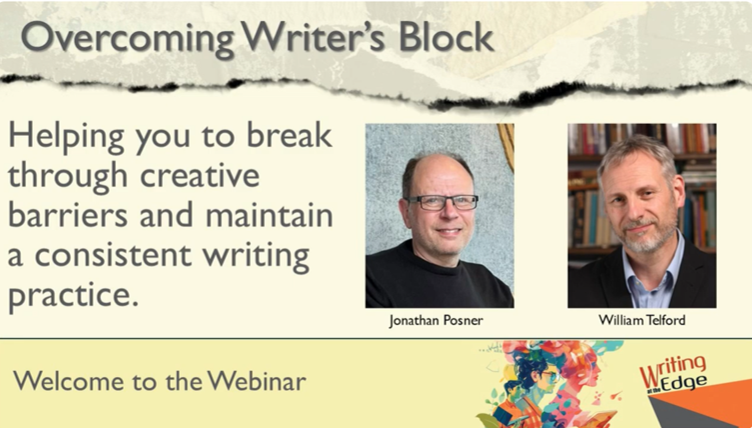
Helping you break through creative barriers

Every writer has been there – staring at a blank page, cursor blinking mockingly, while the words simply refuse to come. Writer’s block is one of the most frustrating experiences in the creative process, but understanding what it is and how to overcome it can transform your writing journey.
What Exactly Is Writer’s Block?
The Royal Literary Fund, established in 1790, defines writer’s block as “a temporary or lasting failure to put words on paper” (or screens, in our digital age). But it’s more nuanced than simply not being able to write anything at all. Writer’s block can manifest as writing that feels flat and lifeless, lacking that essential spark that makes prose come alive. Sometimes you’re putting words down, but they don’t sing – your work needs literary CPR.
Interestingly, not everyone believes writer’s block actually exists! Philip Pullman, author of His Dark Materials, famously argued, “Plumbers don’t get plumbers block, and doctors don’t get doctors block” – viewing it as a discipline issue. Norman Mailer called it “a failure of the ego,” while Jerry Seinfeld dismissed it as “a phony excuse for not doing your work.”
Yet for every sceptic, there’s a literary giant who has wrestled with creative paralysis. F. Scott Fitzgerald, Douglas Adams, Harper Lee, and Ralph Ellison all reportedly struggled with writer’s block. The reality is that creative block is a real experience, that can significantly impact a writer’s productivity and confidence.
Understanding the Causes
The term “writer’s block” was coined by Austrian psychiatrist Dr. Edmund Bergler in 1947, though his Freudian explanations seem a little outdated today. Modern understanding points to more practical causes: stress, mental health issues like depression, financial worries, physical illness, and simple exhaustion.
Tiredness is a major culprit – creativity doesn’t flow easily when you’re mentally and physically drained. While some writers like Philip K. Dick thrived during late-night sessions, most of us write best when fresh.
Procrastination is another common barrier. It’s not about laziness, but about getting caught up in distractions when we should be focusing on our craft.
Practical Solutions for Breaking Through
The most important advice? Just start. As a quote often attributed to Mark Twain says, “The hardest part of writing is applying the seat of the pants to the seat of the chair.” Hemingway called it “bleeding” onto the page. Don’t worry about perfection – get something down first. One writer calls this initial output “the vomit” – you can clean it up later, but you need raw material to work with.
Establish a routine. Write when you’re fresh (mornings work best for many), and maintain consistency – same time, same place. This trains your brain to switch into writing mode automatically.
Seek inspiration through input. As Joe Strummer of The Clash said, “To have output, you must have input.” Read voraciously, conduct research, and feed your own creativity well.
Try clustering – a brainstorming technique using a central word to generate related ideas. Or follow James Patterson’s approach: work on multiple projects simultaneously, so when one stalls, you can pivot to another.
Final Thought…
Remember, you’re not alone in facing writer’s block. Don’t be afraid to borrow inspiration from other works – Shakespeare, Zadie Smith, and James Joyce all did it. The key is making borrowed elements your own.
Keep writing, no matter what. Every word you put down, even the imperfect ones, brings you closer to finding your voice and telling your story. The page may be blank now, but it won’t stay that way forever.
For more on this topic, see Jonathan Posner and William Telford’s discussion here. Or click the picture below